
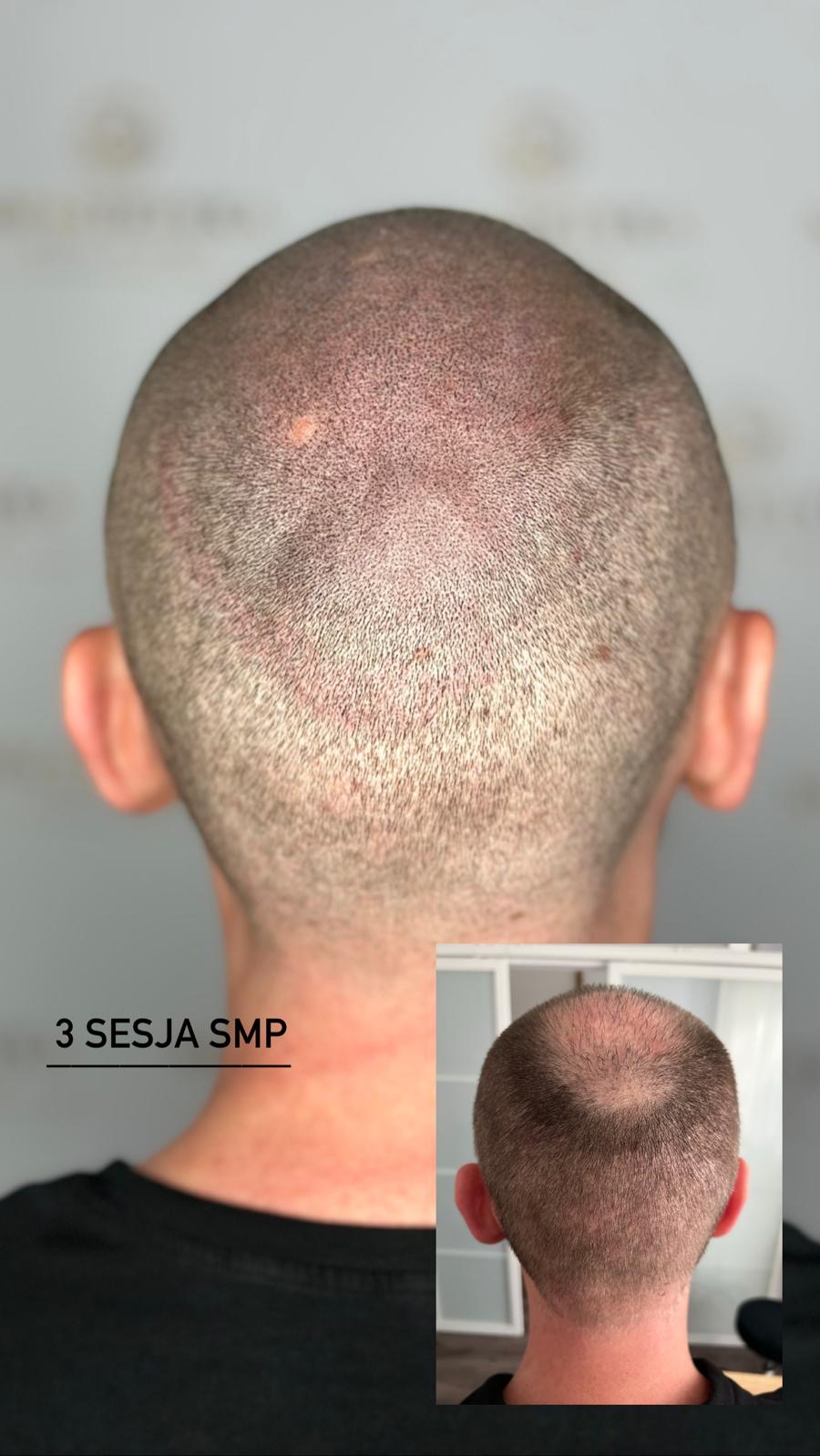
A hair transplant and scalp micropigmentation (SMP) are two completely different ways of dealing with visible hair loss. The first moves your own hair to the areas where it is missing. The second does not add any hair – it recreates the look of closely cropped hair on the skin. In this article we compare them step by step and explain when it makes sense to combine them.
How each method works
Hair transplant
This is a surgical procedure. A doctor harvests hair follicles from the back and sides of the head (with the FUE method – one by one, or FUT – a strip of skin) and implants them where the hair has thinned. Transplanted hair keeps growing, so you can wear it longer.
Scalp micropigmentation
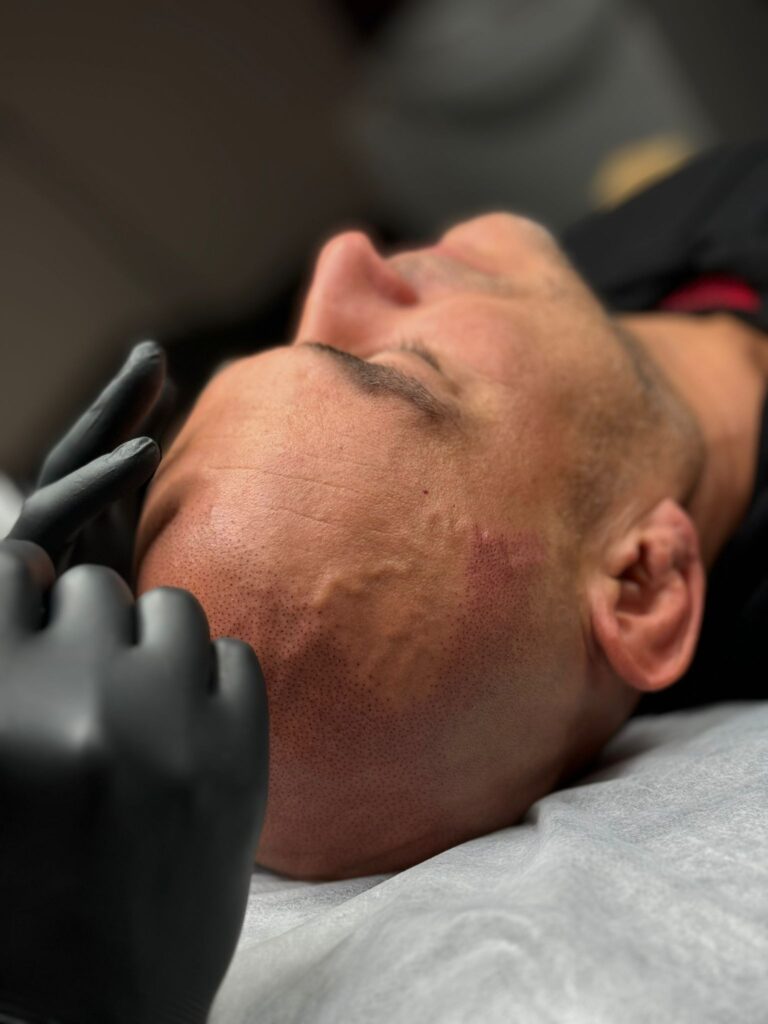
This is a non-surgical treatment. The specialist places tiny dots of pigment in the upper layers of the skin so that they resemble hair follicles. The result looks like a freshly shaved head or denser hair. You can read more about the treatment itself on our scalp micropigmentation in Warsaw page.
Comparison: hair transplant vs SMP
| Hair transplant | Scalp micropigmentation (SMP) | |
|---|---|---|
| Result | real hair that you can grow longer | the look of closely cropped hair or added density |
| Procedure | surgery under local anaesthesia | a few sessions, no surgery |
| Recovery | from several days to two weeks, full result after many months | a few days of redness after each session |
| Requirement | enough donor hair | being happy with a short haircut (or Lady SMP for longer hair) |
| Longevity | transplanted hair stays, but hair loss may progress around it | several years, then a refresh |
When a hair transplant is the better choice
When you want longer hair, your hair loss is moderate (for example receding temples) and you have enough donor hair. The decision about a transplant is always made together with a doctor.
When scalp micropigmentation is the better choice
When hair loss is extensive or complete, you do not want surgery, you do not have enough donor hair, or you simply feel good with a short haircut. SMP also works well for scars and for alopecia areata in remission.
Hair transplant and micropigmentation together
The two methods complement each other well. After a transplant there are often gaps between the transplanted hairs and scars in the donor area – micropigmentation conceals them visually. You only need to wait at least 6–10 months after the transplant. We describe the details on the micropigmentation after a hair transplant page.
It also works the other way round: micropigmentation does not rule out a hair transplant later on.
Where to start
If you are considering a transplant, talk to a trichologist or a hair surgeon. If you want to find out whether micropigmentation is right for you, book a free online consultation – we will look at your photos and tell you how many sessions you are likely to need. You can also read how SMP differs from a regular tattoo in our article scalp micropigmentation vs tattoo.
Related articles
Scalp micropigmentation aftercare: mistakes that spoil the result
Scalp micropigmentation is an effective and increasingly popular way to regain confidence and improve the look of people…
Scalp micropigmentation vs tattoo: what is the difference?
Scalp micropigmentation (SMP) and tattooing may look similar at first glance, because in both cases pigment is placed…
Scalp micropigmentation: 7 myths people still believe
Scalp micropigmentation is becoming more and more popular as an effective solution for hair loss. Despite its growing…