
Micropigmentation after a hair transplant
- Home
- Micropigmentation after a hair transplant
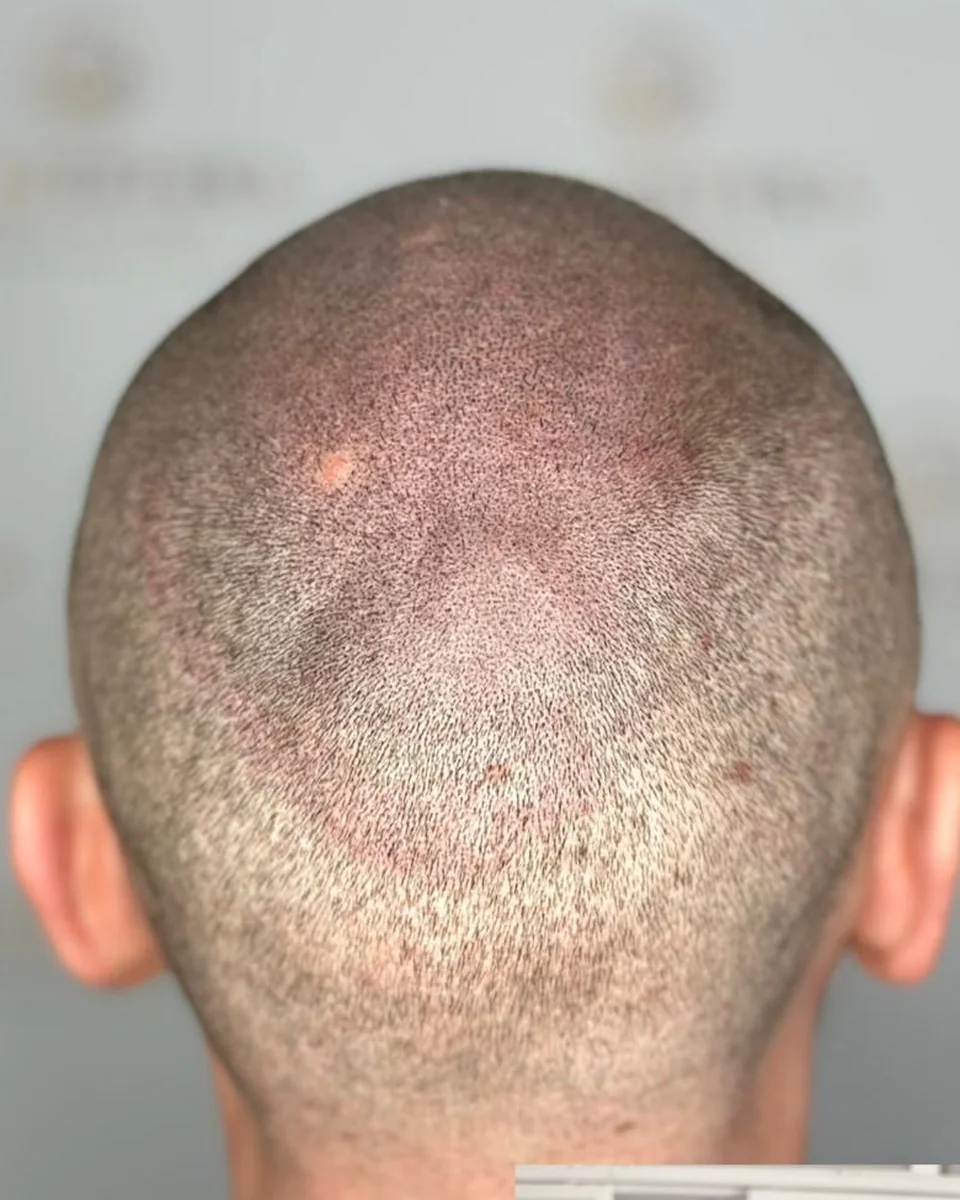
When a transplant didn’t give the full result
Micropigmentation after a hair transplant fills the see-through areas between transplanted hairs and camouflages surgical scars. It is often the simplest way to make the hairstyle look fuller without another operation.
Skin after a transplant is often tougher and more resistant, so the work takes longer and the treatment is priced separately. You need to wait at least 6–10 months after the transplant before micropigmentation.
When does SMP after a transplant make sense?
Most people who come to us for micropigmentation after a transplant have:
- see-through areas between transplanted hairs
- transplant scars that bother them
- lower hair density than they expected
- a receding hairline above the forehead despite the transplant
See also contraindications. We will discuss any doubts at the consultation.
Results
See-through areas nobody can see
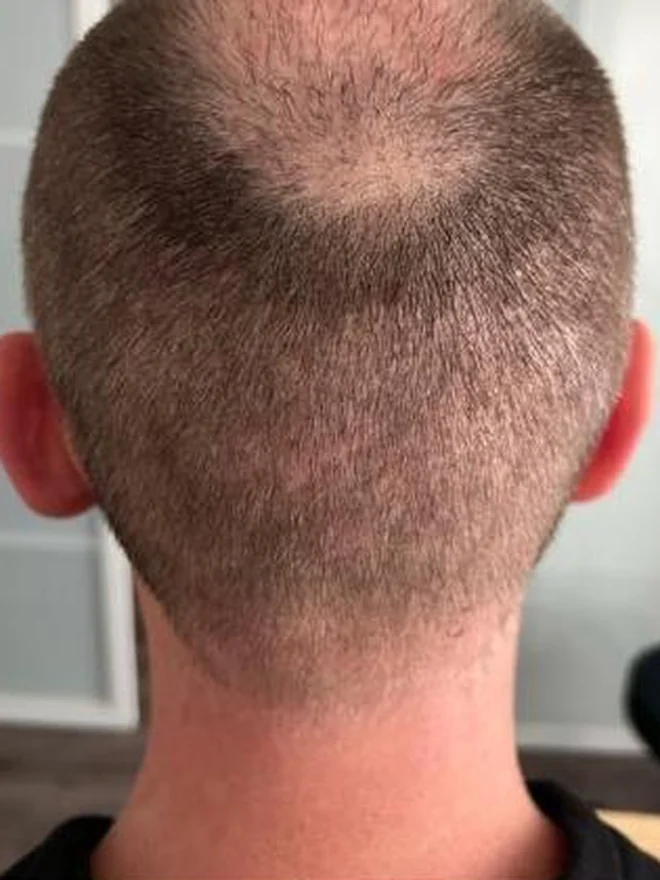
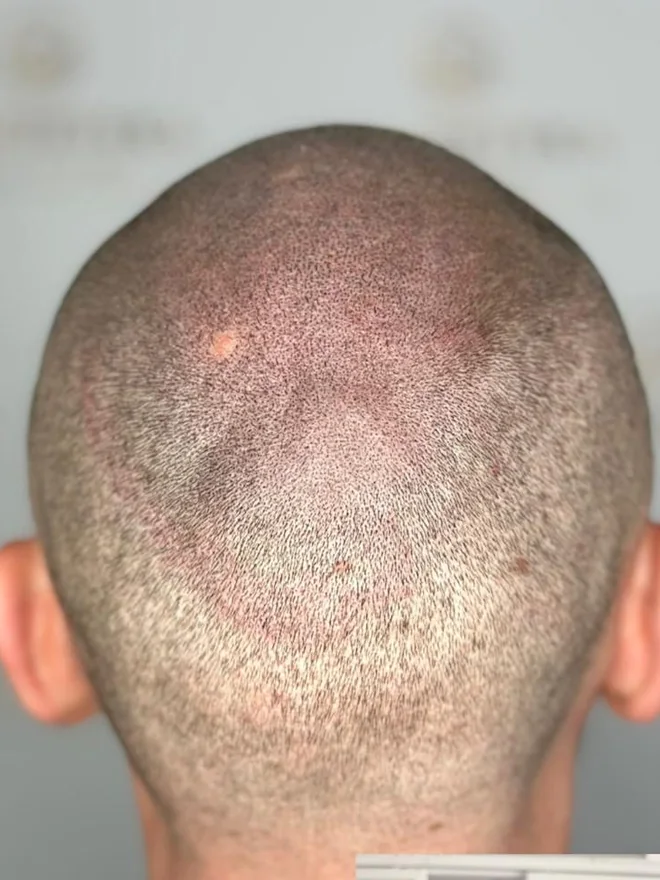
The same client before the treatment and after the third SMP session. The pigment fills the space between transplanted hairs, so the scalp no longer shows through.
After transplant
When SMP after a transplant makes the most sense
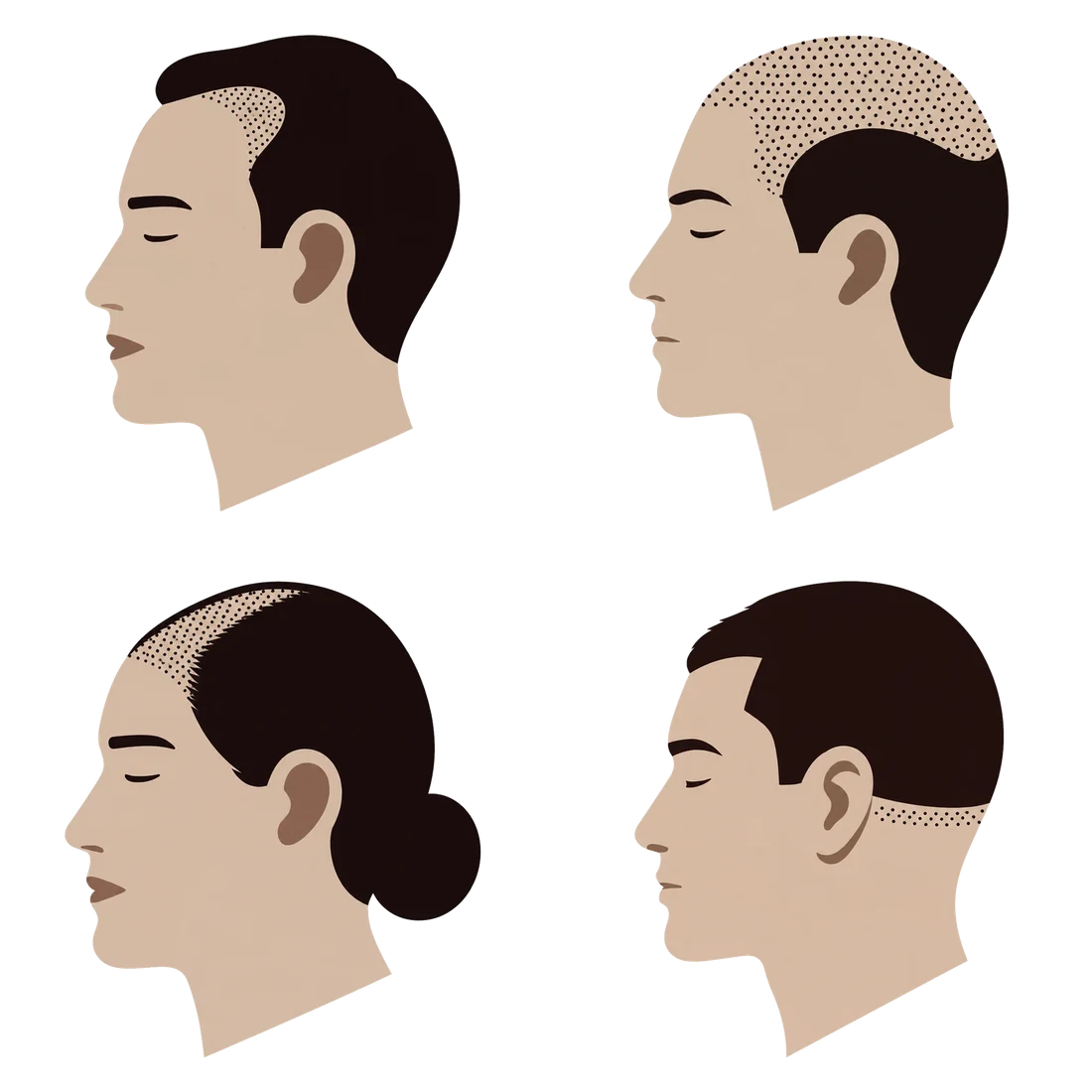
A transplant gives you hair, but not always the density you expected. Micropigmentation complements the result optically.
- Gaps between the hairsThe pigment darkens the scalp between transplanted hairs, so the hairstyle looks fuller.
- Donor-area scarsWe camouflage the scars that often bother people after a transplant.
- The right momentWe do the treatment at least 6–10 months after the transplant so as not to harm the hair.
- Longer workSkin after a transplant is often tougher, so the session takes longer and is priced separately.
What the treatment looks like
step by step
Consultation
We check whether the treatment is right for you and set the number of sessions. Online it is free, in the studio it costs PLN 100.
Skin assessment and design
We check how the skin has healed after the transplant and match the pigment shade to your hair.
Sessions and healing
Each layer needs the previous one to heal, so we work in at least 3 sessions. The pigment settles and reaches its final look after about 3–4 weeks.
Before and after the treatment
How to prepare and what to look after
Before the treatment
- For the short-hair look, shave your head to 0.5 mm the day before.
- The day before, use a grainy scalp scrub, without acids.
- Don’t drink alcohol the day before, or coffee and other caffeinated drinks on the day of the treatment.
- On the day of the treatment, don’t style your hair with hairspray, dry shampoo or other products.
- Don’t stop medicines you take regularly, but tell us about all your medicines before the treatment.
- Avoid sunbathing for at least a week before the treatment.
- Don’t use products with retinoids or fruit acids on your scalp.
After the treatment
- You will receive aftercare instructions in the studio, also in printed form.
- Don’t pick dry flakes, as they may leave gaps.
- Keep the pigmented area clean.
- Don’t worry about the strong colour at the beginning. It settles over the following weeks.
- After the series is complete, protect your scalp with SPF 50+.
Contraindications
The treatment is ruled out by:
- pregnancy or ongoing breastfeeding
- active skin inflammation in the treatment area
- fever or inflammation in the body
- cold sores
- being under the influence of alcohol or drugs
- taking oral retinoids
- a tendency to keloids
We assess at the consultation:
- diabetes – treatment possible when blood sugar is stable
- blood clotting disorders – treatment possible if clotting allows it
- psoriasis – treatment possible if it is not in the treatment area
- a tendency to scarring and difficult healing
- sensitive skin and skin allergies
- acne and other skin problems
- health conditions that may affect healing
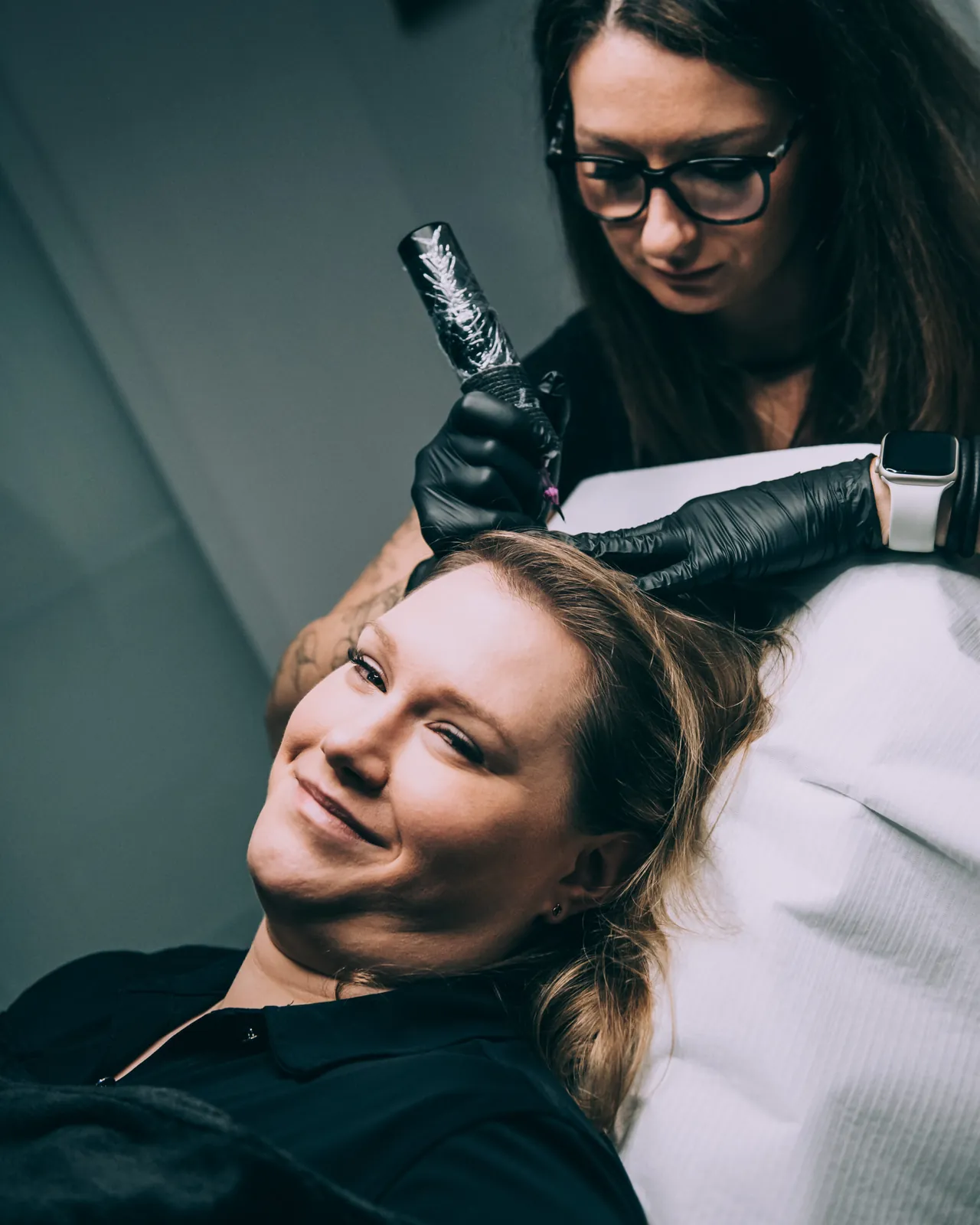
Book your first appointment
Start with a free online consultation. With no obligation, we will check whether the treatment is right for you.
Nadia is great at what she does. Highly recommended, amazing results. From a bald head to an elegant shadow.
A very professional approach. Nadia understands exactly what the client needs.
I am delighted. Nadia is unbeatable. Amazing technique and a great eye for aesthetics!
Professional and with a sense of humour.
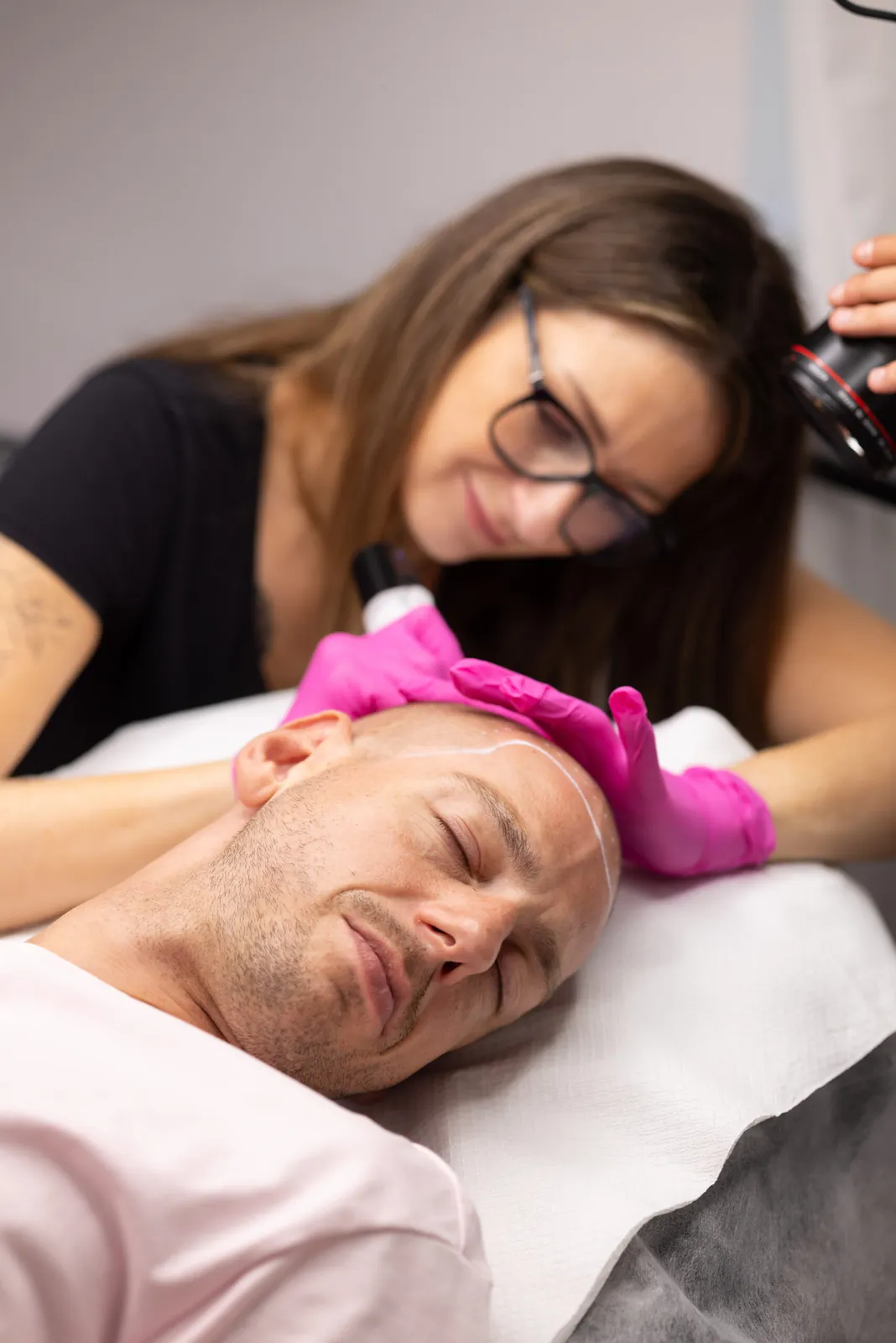
How much does micropigmentation after a transplant cost?
Skin after a transplant needs longer work. We give an exact quote at the consultation.
We set the number of sessions at the consultation. You will find other treatments in the micropigmentation price list.
Micropigmentation and hair transplants: how they complement each other
A transplant moves your own hair to the places where it is missing. However, it does not always give the density you expected, and it leaves scars in the donor area. Scalp micropigmentation complements the result optically, without another operation.
SMP before or after a transplant?
One doesn’t rule out the other. If you are planning a transplant, you can have micropigmentation first and transplant hair later. If you have already had a transplant, wait at least 6–10 months so the transplanted hair takes well.
Transplant scars
A transplant leaves a linear scar at the back of the head or many small, lighter dots in the donor area. The pigment fills them in so they don’t stand out against closely cut hair. Read more about scar camouflage on the page scar camouflage.
What if the transplant didn’t cover the receding hairline?
A receded line above the forehead or thinning temples often remain after a transplant. Then we combine the work: we thicken the transplanted area and recreate the hairline. See what hairline micropigmentation.
How much does micropigmentation after a transplant cost
Skin after a transplant is often tougher, so the work takes longer. The treatment costs from PLN 2800, and we set the exact quote and number of sessions at the consultation. You will find all prices in the micropigmentation price list.
Questions about SMP after a transplant
Wait at least 6–10 months after the transplant. This time is needed for the transplanted hair to take well.
Yes. Micropigmentation camouflages the scars that often bother people after a transplant and fills the see-through areas between the hairs.
Yes. Scalp micropigmentation does not rule out a transplant, and the two can complement each other.
Skin after a transplant is often tougher and more resistant, so the work takes longer.
New pigmentation takes at least 3 sessions 2–4 weeks apart. We set the exact number at the consultation.
No. A correctly performed treatment takes place in the skin, far from the hair bulb. The only important thing is to keep the gap after the transplant.
It depends on individual sensitivity, but most people describe the treatment as only mildly painful.
Micropigmentation fades gradually, and the pace depends on the skin and aftercare. Difficult and oily skin usually needs a refresh after 1–2 years, normal and dry skin not earlier than after 2–3 years.
Consultation
Not sure where to start?
Let’s talk. At a free online consultation we will check which treatment and scope will suit you best.
Micropigmentation
Permanent makeup
Contact
- Radzymińska 52/1
03-574 Warsaw - 514 007 360
- recepcja@nm-estetyka.pl
- Mon–Thu 9:00–16:00
Fri 11:00–16:00
Sat–Sun closed
We respect your privacy
Privacy settings
Choose which cookie categories you consent to. Necessary cookies are always active, because the website does not work properly without them.
Files required for the website to work, e.g. security, navigation and basic functions. They cannot be switched off.
They help us see which pages are visited and how you use the website (e.g. Google Analytics). The website works the same without them.
They let us measure the effectiveness of our ads, e.g. on Google and on Facebook or Instagram.
They remember your choices on the website to make it more convenient to use.