
Hairline micropigmentation
- Home
- Hairline micropigmentation

An even hairline without surgery
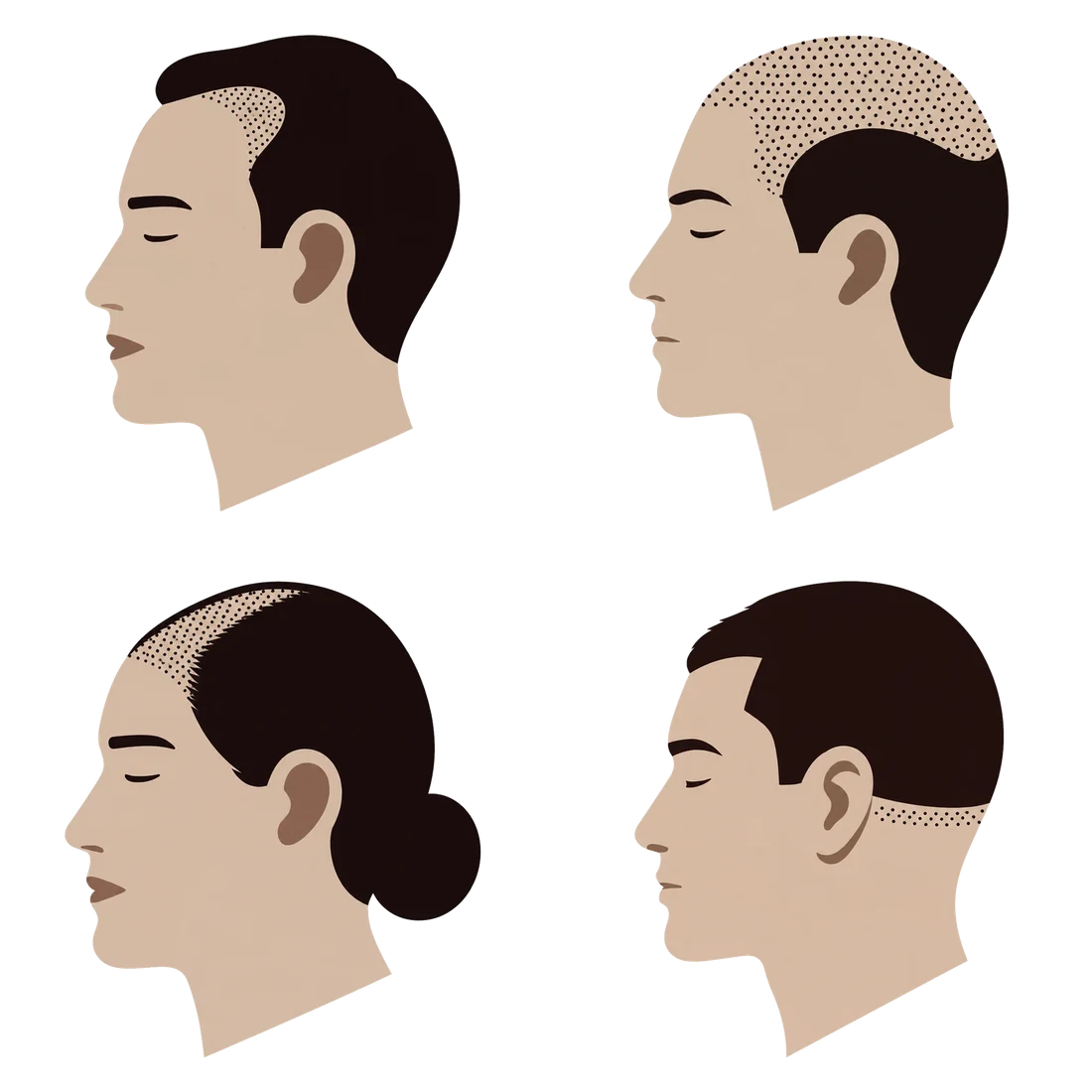
Hairline micropigmentation is a treatment in which we recreate the hairline above the forehead and temples. Tiny dots of pigment matched to your hair colour fill the receded areas, so the hairline looks natural and even.
Camouflaging a receding hairline works both with closely cut hair and with a longer hairstyle, when you want to optically thicken the temples. We design the new line together with you and build the result over several sessions.
When is it worth camouflaging a receding hairline?
Most people who come to us for hairline micropigmentation have:
- a receding hairline above the forehead
- a high forehead or an uneven, asymmetric hairline
- thinning hair at the temples with a longer hairstyle
- a receding hairline in women
- an unsatisfying transplant result around the forehead
See also contraindications. We will discuss any doubts at the consultation.
Results
A hairline nobody will notice
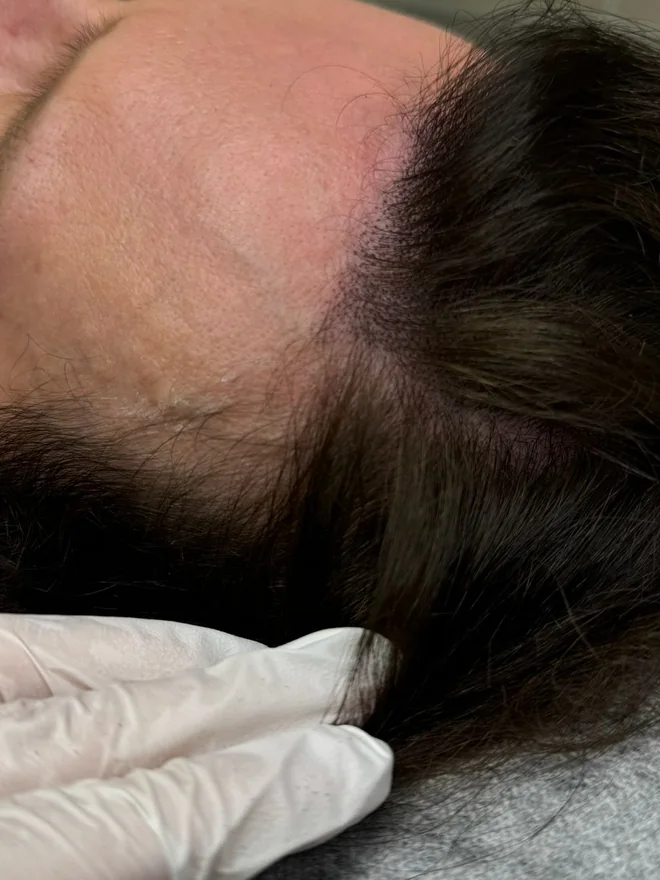
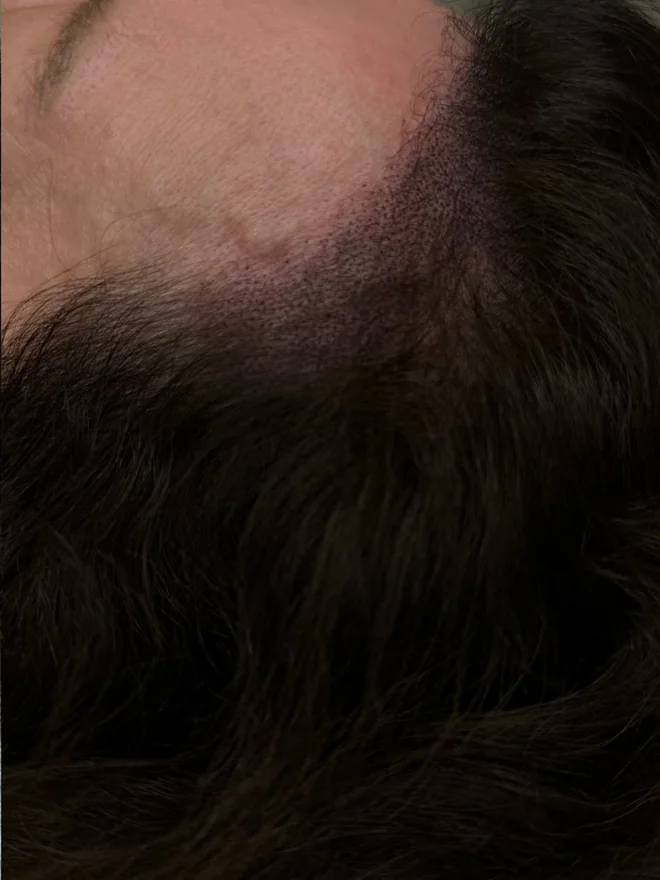
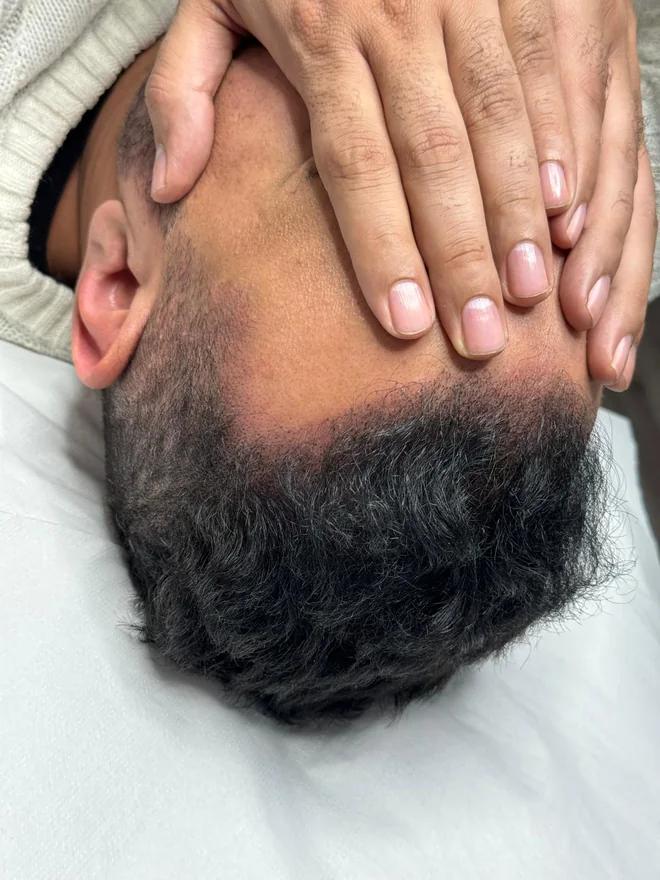
The same client before and after the treatment. The receded areas above the temple are filled in and the hairline looks natural.
Hairline design
How we design the line above the forehead
With a receding hairline, the line itself matters most. It decides whether the result looks natural or painted on.
- Matched to your faceWe set the line to suit your age, forehead shape and facial features.
- Drawing before the treatmentWe draw the shape on your skin. You approve it before we place the first dot.
- A soft edgeWe use the “most natural hairline” technique: the line is gently diffused rather than sharply cut.
- We think about the futureWe also shade the dots into the growing hair, so no contrast appears if the hairline keeps receding.
What the treatment looks like
step by step
Consultation
We check whether the treatment is right for you and set the number of sessions. Online it is free, in the studio it costs PLN 100.
Hairline design
We draw the new line on your skin and choose the pigment shade before placing the first dot.
Sessions and healing
Each layer needs the previous one to heal, so we work in at least 3 sessions. The pigment settles and reaches its final look after about 3–4 weeks.
Before and after the treatment
How to prepare and what to look after
Before the treatment
- For the short-hair look, shave your head to 0.5 mm the day before.
- The day before, use a grainy scalp scrub, without acids.
- Don’t drink alcohol the day before, or coffee and other caffeinated drinks on the day of the treatment.
- On the day of the treatment, don’t style your hair with hairspray, dry shampoo or other products.
- Don’t stop medicines you take regularly, but tell us about all your medicines before the treatment.
- Avoid sunbathing for at least a week before the treatment.
- Don’t use products with retinoids or fruit acids on your scalp.
After the treatment
- You will receive aftercare instructions in the studio, also in printed form.
- Don’t pick dry flakes, as they may leave gaps.
- Keep the pigmented area clean.
- Don’t worry about the strong colour at the beginning. It settles over the following weeks.
- After the series is complete, protect your scalp with SPF 50+.
Contraindications
The treatment is ruled out by:
- pregnancy or ongoing breastfeeding
- active skin inflammation in the treatment area
- fever or inflammation in the body
- cold sores
- being under the influence of alcohol or drugs
- taking oral retinoids
- a tendency to keloids
We assess at the consultation:
- diabetes – treatment possible when blood sugar is stable
- blood clotting disorders – treatment possible if clotting allows it
- psoriasis – treatment possible if it is not in the treatment area
- a tendency to scarring and difficult healing
- sensitive skin and skin allergies
- acne and other skin problems
- health conditions that may affect healing
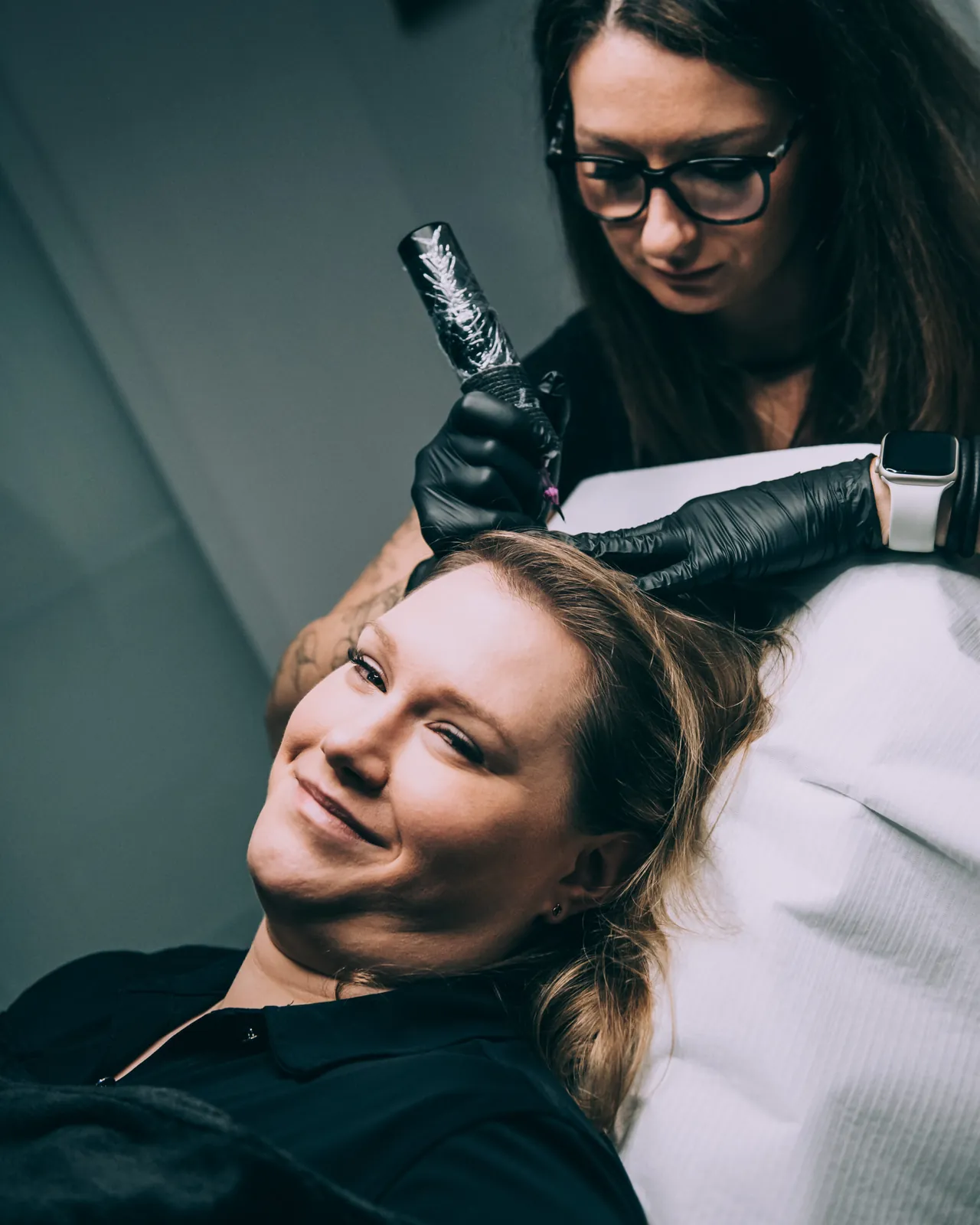
Book your first appointment
Start with a free online consultation. With no obligation, we will check whether the treatment is right for you.
Nadia is great at what she does. Highly recommended, amazing results. From a bald head to an elegant shadow.
A very professional approach. Nadia understands exactly what the client needs.
I am delighted. Nadia is unbeatable. Amazing technique and a great eye for aesthetics!
Professional and with a sense of humour.
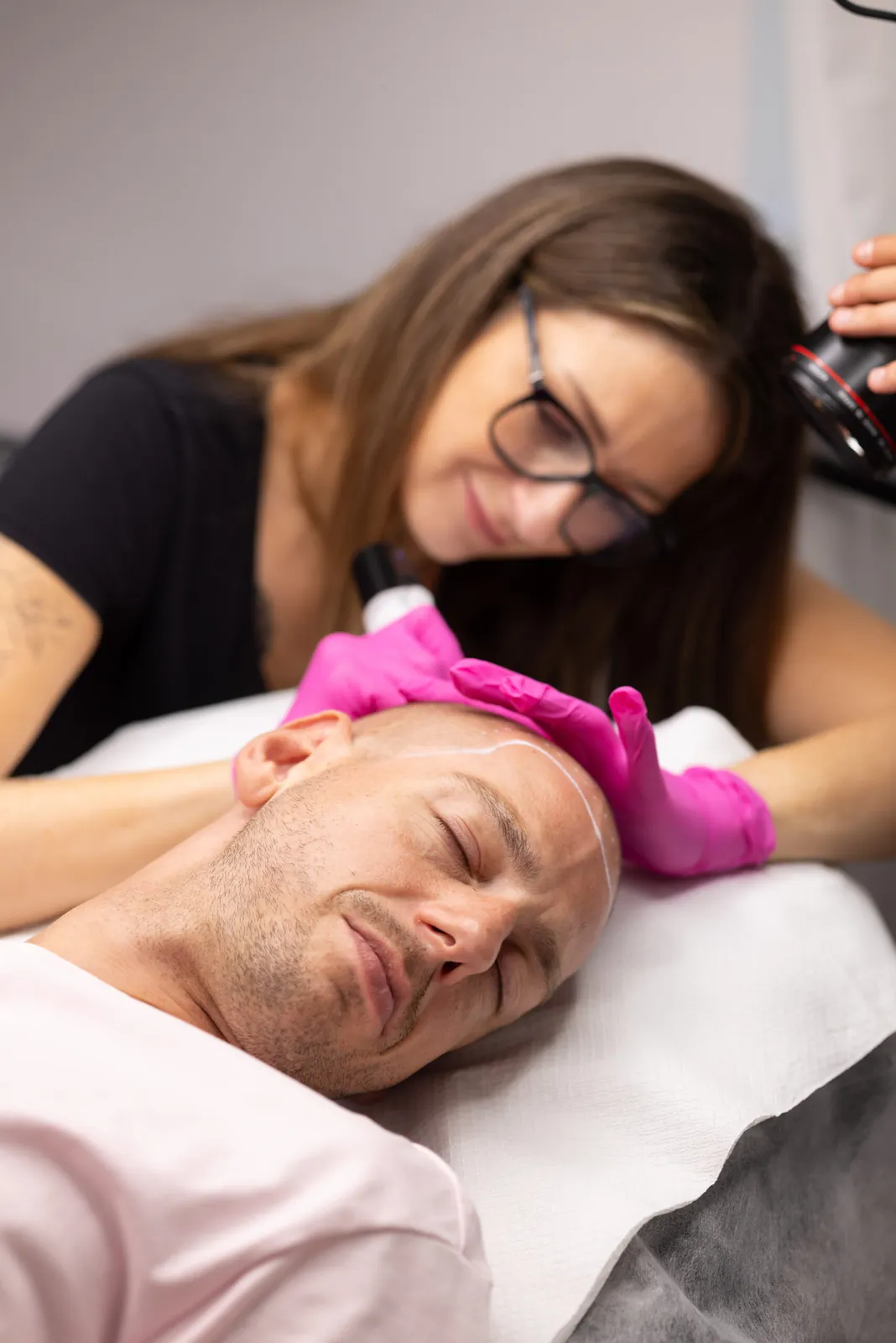
How much does hairline micropigmentation cost?
The price depends on the area and working time. We give an exact quote at the consultation.
Prices are per session, and a full result takes at least 3 sessions. You will find other treatments in the micropigmentation price list.
How to hide a receding hairline without surgery?
A receding hairline can be camouflaged in several ways before you think about a transplant:
- hairstyle – a short textured cut or a fringe falling onto the forehead draws attention away from the receded line,
- hair fibres – a quick, cosmetic fix for thinning that lasts until the first wash,
- hairline micropigmentation – a lasting restoration of the hairline above the forehead, without surgery and without daily care.
We compare each of these methods in the article (in Polish) how to hide a receding hairline – methods without surgery. If your receding hairline is the start of wider hair loss, also read about how male hair loss progresses and when it is worth thinking about micropigmentation of the whole head.
Questions about hairline micropigmentation
We set it together at the consultation and draw it on your skin before the first dot. This way you can see how it will look before we start.
For the closely cut look, yes: shave your head to 0.5 mm the day before. If you wear longer hair, we will discuss it at the consultation.
New pigmentation takes at least 3 sessions 2–4 weeks apart. Each new layer needs the previous one to heal.
That is why we aim for a natural result. Proper shading of the dots into the still-growing hair means that even as hair loss progresses, there is no drastic contrast between the skin and the pigmentation.
It depends on individual sensitivity, but most people describe the treatment as only mildly painful.
Micropigmentation fades gradually, and the pace depends on the skin and aftercare. Difficult and oily skin usually needs a refresh after 1–2 years, normal and dry skin not earlier than after 2–3 years.
Yes. SMP can camouflage see-through areas between transplanted hairs and scars. Wait at least 6–10 months after the transplant. More on the page micropigmentation after a transplant.
Yes, we remove the pigment with a laser. Removing scalp micropigmentation costs PLN 500 per session.
Consultation
Not sure where to start?
Let’s talk. At a free online consultation we will check which treatment and scope will suit you best.
Micropigmentation
Permanent makeup
Contact
- Radzymińska 52/1
03-574 Warsaw - 514 007 360
- recepcja@nm-estetyka.pl
- Mon–Thu 9:00–16:00
Fri 11:00–16:00
Sat–Sun closed
We respect your privacy
Privacy settings
Choose which cookie categories you consent to. Necessary cookies are always active, because the website does not work properly without them.
Files required for the website to work, e.g. security, navigation and basic functions. They cannot be switched off.
They help us see which pages are visited and how you use the website (e.g. Google Analytics). The website works the same without them.
They let us measure the effectiveness of our ads, e.g. on Google and on Facebook or Instagram.
They remember your choices on the website to make it more convenient to use.